
Table of Contents
In schools, safeguarding concerns do not always begin with a disclosure. They do not necessarily arrive neatly labelled as a safeguarding incident, nor do they always present themselves first to the Designated Safeguarding Lead.
Sometimes, they begin with a child who starts arriving late. A previously engaged pupil becomes withdrawn. A young person who rarely attracts attention suddenly begins receiving behaviour sanctions. Friendships change. Attendance deteriorates. Academic engagement falls. A child becomes unusually confrontational, anxious or tired.
Individually, each observation may appear relatively insignificant. Collectively, they may tell us something much more important.
Behaviour is often the visible part of an invisible safeguarding story.
Moving beyond “What happened?”
Throughout my work in education and behaviour, I have repeatedly seen how easily behaviour can be viewed primarily through the lens of compliance. A pupil refuses an instruction. A consequence is issued. A student is repeatedly late. The lateness is recorded. Two pupils have an altercation. The incident is logged.
None of these responses is necessarily wrong. Schools need boundaries, expectations and consequences. Effective behaviour cultures provide children with predictability and safety. But safeguarding requires us to ask an additional question.
Not simply: “What has this child done?” But: “What has changed for this child?”
A significant change in behaviour can be communication. It may indicate distress, unmet need, difficulties at home, bullying, exploitation, harmful online experiences, deteriorating mental wellbeing or a change in relationships. It does not automatically mean that a safeguarding concern exists, nor should every behaviour incident be treated as one. It does mean, however, that change should create curiosity.
From behaviour data to safeguarding intelligence
Schools generate extraordinary amounts of information about children every day. We record attendance, behaviour incidents, achievement, pastoral concerns, safeguarding information, medical visits, academic progress, suspensions, detentions, changes in friendship groups and, increasingly, concerns relating to children’s online lives.
The challenge is not necessarily the absence of information. The challenge is connecting it.
Imagine a pupil who, over several weeks, has begun arriving late; received several behaviour sanctions when they previously received very few; become increasingly withdrawn; experienced friendship difficulties; stopped completing work; visited the medical room repeatedly; and had several unexplained absences.
Each individual event may have been dealt with appropriately by a different adult. But who is seeing the whole child?
That is where safeguarding systems such as CPOMS can become particularly powerful. A chronology is more than a collection of records. Used well, it can enable safeguarding professionals to identify patterns, changes and connections that may otherwise remain hidden.
The objective should not simply be better recording. It should be better understanding.
The “small things” matter
Safeguarding professionals understand the importance of professional curiosity. Yet one of the difficulties in a busy school is that the person seeing one piece of information may have no knowledge of the other pieces.
The form tutor notices tiredness. The behaviour team notices increased aggression. The attendance officer notices lateness. A teacher notices deteriorating work. Pastoral staff notice friendship difficulties. The DSL receives a seemingly unrelated concern.
No single observation necessarily crosses a safeguarding threshold. Together, however, they may change our understanding of that child completely.
Low-level information should not automatically be interpreted as low-value information. Small observations can become significant when they form a pattern.
Behaviour teams are part of the safeguarding intelligence network
There is another important organisational question for schools: where does the behaviour team sit in relation to safeguarding?
In my experience, behaviour professionals often have exceptional visibility of children’s everyday lives. They see pupils in corridors, during social times, in detentions and following incidents. They observe peer dynamics, conflict, emotional regulation and changes in presentation. They often build relationships with children who struggle to engage with more formal support.
That gives behaviour teams a potentially important safeguarding role. This does not mean turning behaviour professionals into investigators or asking them to make safeguarding judgements outside their remit. It means ensuring that the information they hold contributes to the wider understanding of the child.
Behaviour teams should not sit downstream from safeguarding. They should form part of the school's safeguarding intelligence network.
From reactive to preventative safeguarding
Traditionally, safeguarding systems can become understandably reactive: Concern → Record → Referral → Intervention.
There will always be situations where this sequence is entirely appropriate. But mature safeguarding cultures should also be capable of something more preventative: Pattern → Curiosity → Context → Early intervention → Monitoring → Escalation where necessary.
Safeguarding should not only be about responding effectively once risk has become obvious. Wherever possible, it should also help us recognise emerging vulnerability earlier. Behaviour information can contribute to that process.
The question is not whether an algorithm or dashboard can identify a vulnerable child for us. Safeguarding will always require skilled human judgement. The opportunity is to make sure that professionals have enough connected information to exercise that judgement well.
In Part Two, I’ll explore how combining technology with professional curiosity and human judgement can turn behaviour data into meaningful safeguarding intelligence in UK and international schools.
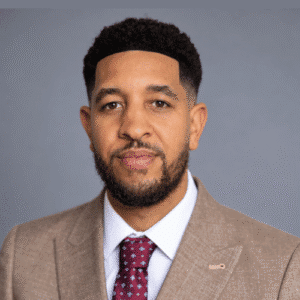
Sean Anthony Sherwood
Sean Anthony Sherwood is an international keynote speaker, education professional and founder of Sean Anthony Health & Wellness. With over 16 years’ experience in education, Sean specialises in behaviour, safeguarding, pastoral care and supporting young people to recognise their strengths and fulfil their potential.
His work has taken him across the UK, Middle East and Asia, delivering keynotes, workshops and professional development to students, educators and school leaders.
At the heart of Sean’s message is a simple question: “What is your why?” — encouraging people to recognise their purpose, understand their strengths and use the gift of time to create meaningful change.