Guest Author: Jon Trew
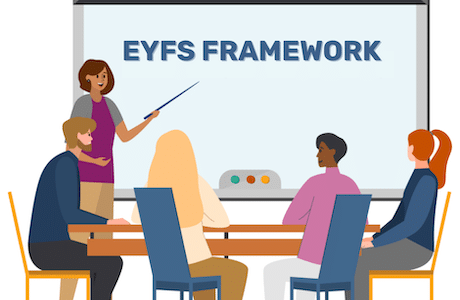
The latest update to the Early Years Foundation stage (EYFS) Statutory Framework came into force on 1st of September 2025 and introduced changes to five key areas for nurseries and childcare settings. There are also changes for childminders and home-based childcare. However, in this article I will be focusing on changes in the regulations to nurseries and early years settings.
The key changes include responsibilities on safeguarding and whistleblowing, child absences and attendance, safer recruitment and reference take up, staff conduct, training, supervision and paediatric first aid, as well as clarification about rules about staff-to-child ratios and wrap around care.
1. EYFS staff-to-child ratios
As a former nursery manager one of my biggest challenges was maintaining correct staff to child ratios. Each day there would be different combinations of children of a variety of ages. This meant I would have to be constantly vigilant that we had enough staff on duty. This challenge was made more difficult when there was staff sickness.
The current expansion of nursery provision with the UK government offering up to 30 funded hours of childcare per week has even further increased the recruitment challenge. With all these pressures it could be tempting to rush or skip the some of the recruitment process. However, serious case reviews all too often reveal that unsuitable individuals are employed because safe recruitment procedures are skipped or ignored. One such case was in the recruitment of Soham caretaker Ian Huntley. Unfortunately, the school failed to contact his last employer and instead relied on prewritten references handed over by Huntley himself.
2. Early years safer recruitment guidance
The guidance makes it clear that all childcare staff must provide references and employers should take up those references. The guidance also sets out what should be included in these references. A template of the information required is provided as a word document by the DES and importantly includes the question “Are you aware of any allegations or concerns that have been raised (whether formal or informal) about the candidate that relate to any safeguarding issues?”.
Providers must ensure that this information is readily available for inspection and should revise their employment process and any recruitment packs they use to ensure they are compliant.
3. EYFS safeguarding whistleblowing procedures
The framework explicitly requires all settings to have whistleblowing procedures that set out how whistleblowing will be handled. It also expands the sections on “concerns about children’s safety and welfare” so providers must be clearer about how they escalate and record concerns, and how they cooperate with other agencies.
Settings should revisit their safeguarding policies and ensure they include reference to whistleblowing as well as ensuring staff are aware of the implications and requirements for whistleblowing, especially when that is related to safeguarding issues. Further new rules include the requirement for safeguarding policies to include details of how safeguarding training is delivered, including how practitioners are supported to put it into place.
4. Early years attendance monitoring
One of the most important lessons of the Covid epidemic was that attendance at early years and school provision was one of the key factors in keeping many children safe, promoting their welfare and in a few crucial cases, keeping them alive. The new guidance makes it clear to providers that they must actively monitor and follow up child absences, particularly if they are associated with a safeguarding concern or is absent for a prolonged period of time.
Providers are expected to have systems that record attendance reliably, have absence follow-up protocols, and are able to share attendance data with statutory agencies.
5. EYFS staff conduct requirements
The new guidance introduces a host of new standards for staff conduct which both clarify and extend rules for the disqualification of adults from working with children. It also makes it explicit that staff should not work with children while under the influence of drugs or alcohol.
Early years staff are required to first take medical advice if they are taking any medication that may impair their ability to look after children. Both smoking and vaping are forbidden around children and should also be banned on or near the childcare premises. Nursery and early years employers should update their staff handbooks to reflect and reinforce this change, ensuring staff are aware of the stricter operational rules.
Employers will also be required to ensure that staff are fluent enough in English to communicate with the children and ensure the wellbeing of children, as well as keeping records and clear instructions about medication and food hygiene.
Further changes include a requirement that requires an up-to-date paediatric first aid (PFA) certificates to be held by an appropriate number of staff (with renewal evidence) and for early years students and trainees are required to have (PFA) training for them to be included in ratios.
Practical EYFS safeguarding checklist for providers
- Update safeguarding policy to include whistleblowing, absence follow-up and clearer escalation routes.
- Revise recruitment packs and single central records; ensure references are requested and evidence saved.
- Audit staff training (safeguarding, PFA, supervision records) and plan renewals.
- Strengthen attendance/absence procedures and evidence of follow-up.
- Check staff English competence where needed for safety-critical duties and document this.
- Communicate changes to parents and staff (policy summary, training dates, how the key person system will operate).
For more information on the updated EYFS requirements, watch this on-demand webinar with childcare expert Sue Asquith.
How CPOMS software can help nurseries stay compliant
Keeping track of all the required records when recruiting and monitoring staff suitability is a challenge, however evidence and case review has shown just how important it is. CPOMS StaffSafe can help solve this problem with a digital single central record to help you keep up to date with all certification and training information regarding adults working in your setting. StaffSafe also provides a secure system within which to report low-level concerns, facilitating confidential whistleblowing which allows safeguarding leads to act faster and resolve any potential issues.
Tracking attendance as a wellbeing concern is also of paramount importance in the updated EYFS framework. CPOMS StudentSafe can help with this important task by linking to your MIS system, including the early childhood platform Famly and a wide range of other leading attendance platforms. These integrations allow safeguarding leads to easily monitor absences and safeguarding concerns in one combined system, so they can readily identify and act upon any patterns of concern.
To learn how CPOMS software can help your early years setting align with the latest EYFS requirements, book a free demo today.